

Articles
Car Maintenance on a Budget: Easy DIY Jobs for a Saturday

Car ownership in South Africa is not cheap. Fuel, insurance, licence fees, tyres and services all add up. The good news is that there are plenty of maintenance jobs you can do yourself with basic tools, a free Saturday morning and a bit of patience. They save money, catch small problems before they become big ones and help you understand your car better.
Here are the jobs almost anyone can tackle, plus the ones best left to a professional.
Before you start: the basics
Tools you will need
You do not need a fully equipped workshop. A basic kit includes:
- A socket set and screwdrivers
- A tyre pressure gauge
- Gloves and rags or paper towels
- A funnel
- A torch or headlamp
- Your owner’s manual, which is the most useful tool of all
Safety first
- Work on level ground with the handbrake on
- Let the engine cool before opening the radiator or touching hot parts
- Never work under a car supported only by a jack; use proper axle stands
- Disconnect the battery for electrical jobs where the manual recommends it
1. Check and top up fluids
This is the easiest and most important habit. With the car on level ground, open the bonnet and check:
Engine oil
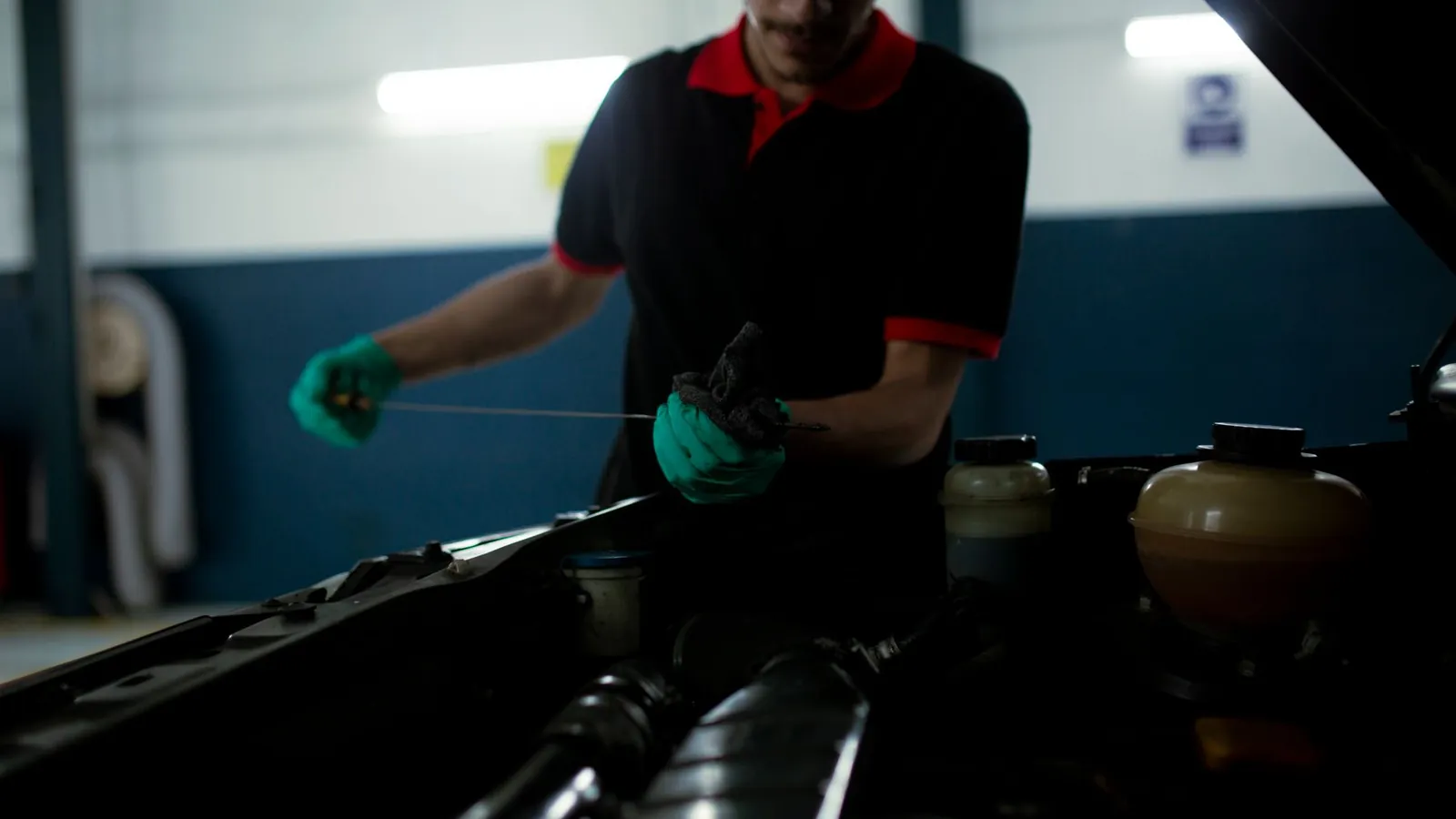
Pull out the dipstick, wipe it, reinsert it fully, then pull it out again. The level should sit between the minimum and maximum marks. If it is low, top up with the oil grade specified in your manual, a little at a time. Very dark, gritty oil or a milky appearance are signs to get the car checked.
Coolant
Check the level in the expansion tank against the markings, only when the engine is cold. Never open a hot radiator cap. Top up with the correct coolant type for your car, as mixing types can cause problems.
Brake fluid
The reservoir has minimum and maximum marks. Brake fluid levels drop slightly as pads wear, but a sudden drop can indicate a leak, which needs professional attention. Use only the fluid type specified.
Windscreen washer fluid
The simplest top-up of all, and one that matters on dusty roads or after driving behind trucks on the N1. Use a proper washer additive rather than dishwashing liquid, which can leave residue and affect rubber.
2. Check tyre pressures and condition
Correct tyre pressure improves fuel economy, handling and tyre life. The recommended pressures are usually on a sticker inside the driver’s door frame or fuel flap, or in your manual. Check pressures when the tyres are cold.
While you are there, check the tread. The legal minimum in South Africa is 1 mm across the full tread, but many experts recommend replacing tyres earlier. Look for bulges, cuts and uneven wear, which can point to alignment or suspension problems. Do not forget the spare wheel.
3. Replace the wiper blades
Worn blades smear, chatter and leave streaks, which is dangerous in a Highveld storm or Cape Town winter rain. Our sun is also hard on rubber. Replacing blades is usually a five-minute job:
- Lift the wiper arm away from the windscreen
- Press the release tab and slide the old blade off
- Clip the new blade on until it clicks
- Lower the arm gently
Measure your old blades or look up the correct sizes, as driver and passenger blades are often different lengths. Do not forget the rear wiper if you have one.
4. Replace the engine air filter
A clogged air filter can affect performance and fuel economy, especially in dusty areas and on gravel roads. On many cars, the air filter box is easy to reach and held closed by clips or a few screws.
- Open the air box
- Note how the old filter sits
- Remove it and wipe out any dust or leaves
- Fit the new filter the same way
- Close the box securely
Check the manual for the recommended interval, and check more often if you drive on dirt roads.
5. Replace the cabin air filter
The cabin filter cleans the air coming into the car through the vents. A blocked one can cause weak airflow, musty smells and fogged windows. On many cars, it sits behind the glovebox, which unclips to give access. It is one of the most satisfying jobs because the difference is immediately noticeable.
6. Replace blown bulbs
Blown bulbs are a common reason for fines and failed roadworthy tests. Many tail light, indicator and number plate bulbs are easy to replace from inside the boot or behind the light. Some headlight bulbs are easy too, while others require removing parts of the front end, so check your manual first.
Tips:
- Take the old bulb with you, or note its type, to buy the correct replacement
- Do not touch the glass of halogen headlight bulbs with bare fingers, as oils can shorten their life
- Replace headlight bulbs in pairs for even light output
- Stick to the bulb type your lights were designed for
7. Clean the battery terminals
White or green crust on the battery terminals can cause starting problems. With the engine off, disconnect the negative terminal first, then the positive. Clean the terminals with a brush and a baking soda and water solution, rinse carefully, dry and reconnect positive first, then negative. Wear gloves and eye protection, since battery acid is corrosive.
8. Keep it clean
A regular wash and interior clean are part of maintenance. Dirt traps moisture, which leads to rust, and a clean windscreen makes driving into the sunrise or sunset much safer.
Jobs to leave to a professional
Some jobs are not worth the risk for a beginner:
- Brakes, beyond a visual check
- Steering and suspension
- Timing belts and chains
- Airbags and seatbelts
- Fuel system work
- Anything that needs special diagnostic equipment
Save more by buying parts smartly
Filters, wiper blades, bulbs and trim clips are all easy to buy yourself. For some items, such as original light covers, glovebox parts or air box housings, a good pre-owned part can save a lot. On SecureAutoMarket, you can buy new and pre-owned parts from verified sellers, with your payment held in escrow by TradeSafe until you receive and accept the item. Parts are delivered to a PUDO locker near you, so you can collect them at your convenience. If you have leftover parts from a DIY project, you can also list them for sale. The support page explains the buying process.
Keep reading
- Most Commonly Replaced Car Parts in South Africa (and When)
- Pothole Damage in South Africa: Parts to Check After a Hit
- Brake Pads and Discs: Signs of Wear and Choosing Replacements
Frequently asked questions
Can DIY maintenance affect my car’s warranty?
Simple checks like topping up washer fluid or checking tyre pressure will not affect a warranty. For scheduled services on a car still under warranty or a maintenance plan, follow the manufacturer’s requirements, which often mean using an approved workshop. Check your warranty terms.
How often should I check my oil and tyre pressure?
A good habit is to check both at least once a month and before any long trip. Check oil on level ground with the engine cold or after it has stood for a few minutes, and check tyre pressures when the tyres are cold.
What should I do with used oil and old filters?
Never pour used oil down a drain or onto the ground. Collect it in a sealed container and take it to a used oil collection point. Many workshops and some retailers accept used oil, and South Africa has an established used oil recycling system.
Which jobs should I leave to a mechanic?
Anything involving brakes, steering, suspension, timing belts, airbags or fuel systems is best left to a professional unless you are experienced and properly equipped. If a job needs special tools or you are unsure, it is cheaper to ask for help than to fix a mistake.